Is Headless WordPress the Future? Pros, Cons, and Use Cases
By Ajay Khandal | Published: | 3 min read
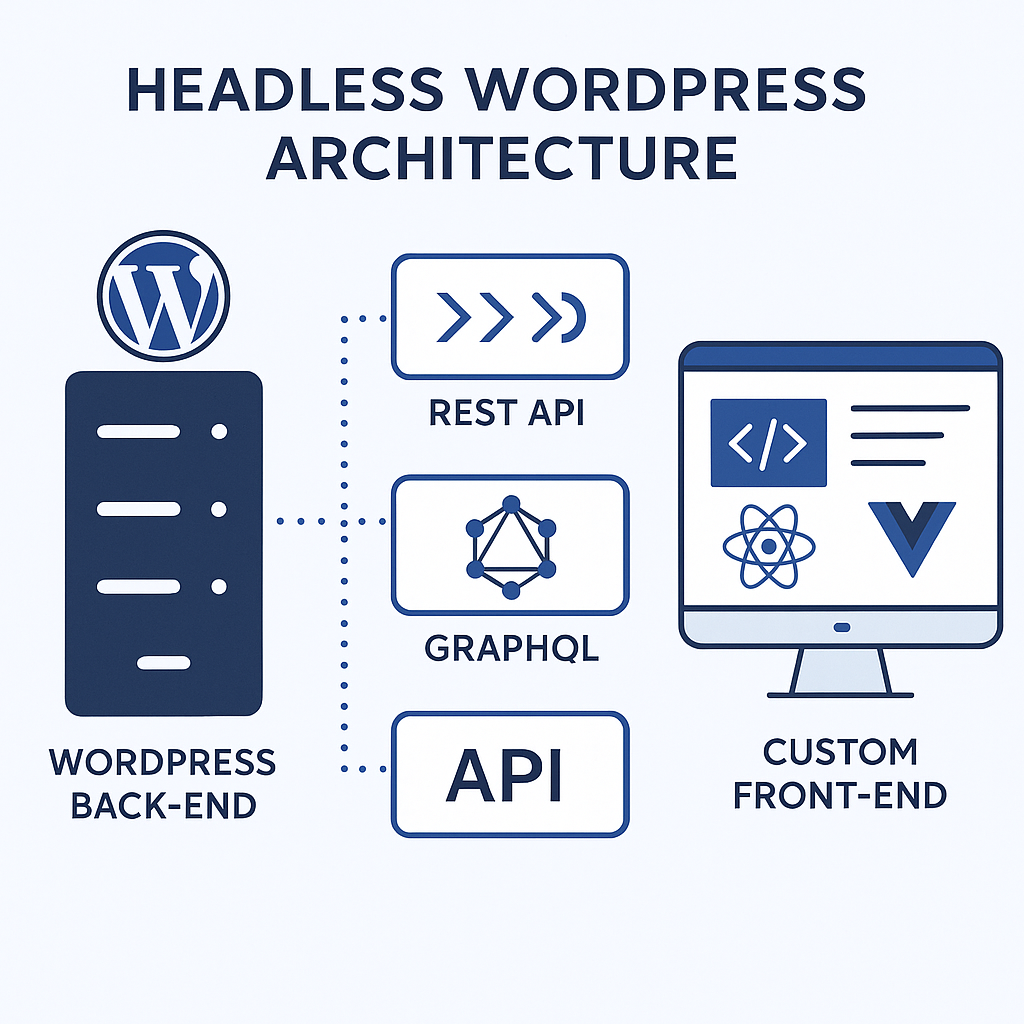
As the digital landscape evolves, businesses are increasingly seeking flexible and scalable solutions for managing and delivering content. One architecture gaining significant traction is headless WordPress. This modern approach decouples the front-end and back-end of WordPress, offering unparalleled control over content delivery.
What Is Headless WordPress?
Headless WordPress is a content management system where the back-end (WordPress admin) operates independently from the front-end (the user-facing site). Instead of using WordPress themes to render content, developers use APIs, such as the REST API or GraphQL, to serve data to custom front-end frameworks like React, Vue.js, or Angular.
How It Works
The process involves:
- Content Management: Use WordPress admin dashboard to create and manage content.
- API Integration: Fetch content via APIs like REST API or GraphQL.
- Custom Front-End: Build a front-end using modern frameworks tailored to your needs.
Pros of Headless WordPress
 Overview of how headless WordPress delivers content.
Headless WordPress offers several benefits, especially for businesses requiring high performance and flexibility.
1. Enhanced Performance
With a decoupled front-end, you can optimize performance by using lightweight frameworks and delivering only the necessary data. This reduces page load times significantly.
2. Cross-Platform Compatibility
Headless architecture enables content delivery to multiple platforms, including mobile apps, IoT devices, and web apps, from a single back-end.
3. Developer Flexibility
Developers can use their preferred tools and frameworks for front-end development, avoiding the limitations of traditional WordPress themes.
4. Scalability
Headless WordPress is ideal for growing businesses that need to scale their operations. It allows you to manage content efficiently while delivering it to diverse channels.
5. Future-Proofing
By separating the front-end from the back-end, you can adapt your technology stack without being tied to WordPress’s native front-end limitations.
Cons of Headless WordPress
While headless WordPress offers numerous advantages, it’s not without challenges:
1. Increased Complexity
Implementing a headless architecture requires advanced technical skills. It’s not as straightforward as a traditional WordPress setup.
2. Higher Development Costs
Custom front-end development can lead to higher upfront costs compared to using pre-built WordPress themes.
3. Limited Plugins Compatibility
Many WordPress plugins rely on the traditional theme structure, which might not work seamlessly in a headless setup.
4. Maintenance Overhead
Managing a headless system demands ongoing maintenance for both the front-end and back-end, as they operate independently.
Use Cases for Headless WordPress
Headless WordPress shines in scenarios where performance, flexibility, and multi-platform delivery are top priorities. Common use cases include:
- Large-Scale Content Platforms: Media companies or blogs that require fast performance and scalability.
- E-Commerce: Integrating with platforms like WooCommerce while delivering custom front-end experiences.
- Mobile Apps: Powering content for native iOS and Android apps.
- Multi-Channel Delivery: Distributing content to websites, apps, and IoT devices.
- Custom Web Applications: Businesses creating highly interactive front-end experiences.
Headless WordPress vs Traditional WordPress
| Feature |
Headless WordPress |
Traditional WordPress |
| Front-End Flexibility |
Customizable with modern frameworks |
Limited to WordPress themes |
| Performance |
Highly optimized |
Dependent on theme quality |
| Multi-Platform Delivery |
Supports apps, IoT, etc. |
Primarily web-based |
| Ease of Setup |
Requires advanced skills |
Beginner-friendly |
| Cost |
Higher upfront costs |
Lower initial costs |
Conclusion
Headless WordPress is undeniably a powerful option for businesses seeking flexibility, performance, and scalability in their CMS architecture. While it’s not the right fit for every project, its benefits are unmatched for those who need multi-platform content distribution or custom front-end experiences.
If you’re considering implementing headless WordPress for your next project, feel free to reach out to me for expert WordPress development services. With years of experience, I can help you navigate the complexities and create a solution tailored to your needs.
Contact me today to discuss your project!